Showing posts with label Professor Manning. Show all posts

Tuesday, October 16, 2012

Audacity

Several of you are planning to play music for your presentations, and to keep them under five minutes, you may need to do some editing. The free software I recommend to do that is called Audacity. You will have to figure out how to use it, but it's pretty user friendly and I can assist if you have any problems. There are manuals and tutorials on the site. From their website:

About Audacity

Audacity is a free, easy-to-use and multilingual audio editor and recorder for Windows, Mac OS X, GNU/Linux and other operating systems. You can use Audacity to:
  • Record live audio.
  • Convert tapes and records into digital recordings or CDs.
  • Edit Ogg Vorbis, MP3, WAV or AIFF sound files.
  • Cut, copy, splice or mix sounds together.
  • Change the speed or pitch of a recording.
  • And more! See the complete list of features.

Tuesday, September 18, 2012

Learning How You Learn

The fifteen of you come from a wide array of various experiences, and many different majors. The list includes:
  • Sociology
  • Biology
  • Mechanical Engineering
  • Nursing
  • Microbiology
  • English
  • Biochemistry
  • Music
  • Pharmacology
  • Business
  • Cinema
  • Chemistry
  • Speech and Hearing
My hope is to engage you based on your interests and to encourage you to share with the class your unique experience and perspective. Strive to connect what you already know and supplement it with what you will learn in this course. Choose your projects and write your blog posts based on this connection. I suppose that if you major is music, cinema, or speech and hearing that these connections will be relatively quick to recognize. The challenge, and a key goal of this course, is to synthesize ideas and concepts from your declared area of study with the wild music by these great composers. Don't feel limited to just your area of expertise, seek to learn by digging up the answers to the natural questions that may arise from this course. The more you learn, the more you realize what you don't know. You will be a student for life, so the skills and tools you utilize for this course, will continue to serve you well far into the future.

Here are a few related links you may want to check out:

15 Steps to Cultivate Lifelong Learning (Stepcase Lifehack)

Study Tip: Learn How You Learn (About.com)

Tips for succeeding in your first year of college (Justin Snider/The Hechinger Report)

Tuesday, September 11, 2012

The Sorcerer's Apprentice

Background:
The Sorcerer's Apprentice (De Zauberlehring) is a symphonic poem* composed by Paul Dukas Composed in 1897, and like many composers of the 19th century, Dukas drew his inspiration from the German Romantic Johann Wolfgang von Goethe. Greek satirst named Lucian wrote a very similar frame story called Philopseudes, which was about an Egyptian priest named Pancrates. Dukas' evocative composition went on to inspire Disney's Fantasia and the 2010 motion picture of the same name.
* A Symphonic Poem is a one-movement piece of program music composed for orchestra.

Walt Disney
You may remember this scene below featuring Mickey Mouse from Fantasia. Watch how Disney animates to the music. Is there any difference between the music that Disney used and what Dukas wrote?


The Poem
Goethe wrote this 14-stanza ballad in 1997. From About.com, below is the complete text of the original German poem alongside an English translation. Listen to a reading of the Goethe poem, both in German and English


Der Zauberlehrling The Sorcerer's Apprentice
Johann Wolfgang von Goethe Translation by Brigitte Dubiel

Hat der alte Hexenmeister Good! The sorcerer, my old master
sich doch einmal wegbegeben! left me here alone today!
Und nun sollen seine Geister Now his spirits, for a change,
auch nach meinem Willen leben! my own wishes shall obey!
Seine Wort' und Werke Having memorized
merkt' ich, und den Brauch, what to say and do,
und mit Geistesstärke with my powers of will I can
tu ich Wunder auch. do some witching, too!


   Walle, walle,    Go, I say,
   manche Strecke,    Go on your way,
   dass zum Zwecke    do not tarry,
   Wasser fliesse,    water carry,
   und mit reichem, vollem Schwalle    let it flow abundantly,
   zu dem Bade sich ergiesse!    and prepare a bath for me!


Und nun komm, du alter Besen! Come on now, old broom, get dressed,
Nimm die schlechten Lumpenhüllen these old rags will do just fine!
Bist schon lange Knecht gewesen: You're a slave in any case,
nun erfülle meinen Willen! and today you will be mine!
Auf zwei Beinen stehe, May you have two legs,
oben sei der Kopf, and a head on top,
eile nun, und gehe take the bucket, quick
mit dem Wassertopf! hurry, do not stop!


   Walle, walle,    Go, I say,
   manche Strecke,    Go on your way,
   dass zum Zwecke    do not tarry,
   Wasser fliesse,    water carry,
   und mit reichem, vollem Schwalle    let it flow abundantly,
   zu dem Bade sich ergiesse.    and prepare a bath for me.


Seht, er läuft zum Ufer nieder! Look, how to the bank he's running!
Wahrlich! ist schon an dem Flusse, and now he has reached the river,
und mit Blitzesschnelle wieder he returns, as quick as lightning,
ist er hier mit raschem Gusse. once more water to deliver.
Schon zum zweiten Male! Look! The tub already
Wie das Becken schwillt! is almost filled up!
Wie sich jede Schale And now he is filling
voll mit Wasser füllt! every bowl and cup!


   Stehe! Stehe!    Stop! Stand still!
   Denn wir haben    Heed my will!
   deiner Gaben    I've enough
   Vollgemessen!    of the stuff!
   Ach, ich merk' es! Wehe! Wehe!    I've forgotten - woe is me!
   Hab' ich doch das Wort vergessen!    what the magic word may be.


Ach, das Wort, worauf am Ende Oh, the word to change him back
er das wird, was er gewesen! into what he was before!
Ach, er läuft und bringt behende! Oh, he runs, and keeps on going!
Wärst du doch der alte Besen! Wish you'd be a broom once more!
Immer neue Güsse He keeps bringing water
bringt er schnell herein, quickly as can be,
Ach, und hundert Flüsse and a hundred rivers
stürzen auf mich ein! he pours down on me!


   Nein, nicht länger    No, no longer
   kann ich's lassen,    can I let him,
   will ihn fassen,    I must get him
   das ist Tücke!    with some trick!
   Ach, nun wird mir immer bänger!    I'm beginning to feel sick.
   Welche Miene! Welche Blicke!    What a look! - and what a face!


O, du Ausgeburt der Hölle! O, you ugly child of Hades!
Soll das ganze Haus ersaufen? The entire house will drown!
Seh' ich über jede Schwelle Everywhere I look, I see
doch schon Wasserströme laufen. water, water, running down.
Ein verruchter Besen! Be you damned, old broom,
der nicht hören will! why won't you obey?
Stock, der du gewesen, Be a stick once more,
steh doch wieder still! please, I beg you, stay!


   Willst's am Ende    Is the end
   gar nicht lassen?    not in sight?
   Will dich fassen,    I will grab you,
   will dich halten,    hold you tight,
   und das alte Holz behende    with my axe I'll split the brittle
   mit dem scharfen Beile spalten.    old wood smartly down the middle.


Seht, da kommt er schleppend wieder! Here he comes again with water!
Wie ich mich nur auf dich werfe, Now I'll throw myself upon you,
gleich, o Kobold, liegst du nieder! and the sharpness of my axe
Krachend trifft die glatte Schärfe. I will test, o spirit, on you.
Wahrlich, brav getroffen! Well, a perfect hit!
Seht, er ist entzwei! See how he is split!
Und nun kann ich hoffen, Now there's hope for me,
und ich atme frei! and I can breathe free!


   Wehe! Wehe!    Woe is me! Both pieces
   Beide Teile    come to life anew,
   steh'n in Eile    now, to do my bidding
   schon als Knechte    I have servants two!
   völlig fertig in die Höhe!    Help me, o great powers!
   Helft mir, ach ihr hohen Mächte!    Please, I'm begging you!


Und sie laufen! Nass und nässer And they're running! Wet and wetter
wird's im Saal und auf den Stufen, get the stairs, the rooms, the hall!
Welch entsetzliches Gewässer! What a deluge! What a flood!
Herr und Meister, hör' mich rufen! Lord and master, hear my call!
Ach, da kommt der Meister! Ah, here comes the master!
Herr, die Not ist groß! I have need of Thee!
Die ich rief, die Geister, from the spirits that I called
werd' ich nun nicht los. Sir, deliver me!


  „In die Ecke   “Back now, broom,
   Besen, Besen!    into the closet!
   Seids gewesen,    Be thou as thou
   denn als Geister    wert before!
   ruft euch nur zu seinem Zwecke    Until I, the real master
   erst hervor der alte Meister!”    call thee forth to serve once more!”

Johann Wolfgang von Goethe

Translation Copyright © Brigitte Dubiel

Here is a very helpful excerpt from program notes for a youth concert by the Makato Symphony Orchestra:
Paul Dukas was a gifted composer, music critic and teacher at the Paris Conservatory. Dukas was very self-critical of his work, publishing only a small number of his best pieces and destroying the rest. He also edited the works of Beethoven, Rameau, Couperin, and Scarlatti for publication. Dukas’ mother was a gifted pianist who sadly died when Paul was only five years old. However, the composer had a close relationship with his father and older brother, both of whom were bankers. Dukas started to study music when he was very young, but did not show particular talent until he was a teenager. At 16, he entered the Paris Conservatory to study harmony and composition, where he also played timpani in the conservatory orchestra.

In 1889 he took a break from music and served in the military for a little over a year, ultimately to return to composing. In addition to teaching and composing, Dukas was inspector of the provincial conservatories in 1912, which enabled him to travel throughout France. After about a year of that, he returned to the Paris Conservatory. He married in 1915 at age 50 shortly after his father died and had one

daughter.

The Sorcerer’s Apprentice, Scherzo after a Ballade by Goethe was written in 1897. The work is an outstanding example of “program music” or a piece of music that tells a story in musical form. Program music is often inspired by places, images or literature. Dukas’ piece was popular from the beginning, but was made very famous by Walt Disney in his 1940 film Fantasia which stars Mickey

Mouse as an unlucky apprentice battling a mishap with brooms and water.

The story actually goes back to ancient Egypt and was retold in ancient Greece by Lucianes of Samosta. In the older story, the sorcerer is a priest in the temple of Isis and the broom is a pestle used with a mortar to grind spices or chemicals. There is a little difference in the possible moral of the story, as well. In Goethe’s story, one is told that you should not start something you cannot finish correctly. In the ancient story Lucianes simply pokes fun of “tall tales.” The 18th century German writer Johann Wolfgang Goethe wrote his version of the story in 1782 as a poem. Dukas placed a French translation of Goethe’s poem in the front of the score as his musical interpretation of the story.
Sorcerer’s Apprentice/Story summary:
An old sorcerer leaves his workshop assigning his apprentice some chores, one of which is to fetch water in a bucket to fill a big tank. The apprentice gets tired of his work and remembers the sorcerer’s spell to magically enable the broom do the work. The magic words work and the broom follows his command to fetch water. Soon the tank is full, but the broom keeps bringing more water. The apprentice cannot remember the words to undo the magic and in his worry and frustration hits the broom- which breaks into two pieces. And now both brooms start carrying water! Soon the whole room is flooded with water swirling everywhere. The sorcerer returns, sees what has happened and returns the situation back to
normal while scolding the naughty young apprentice.
Sorcerer’s Apprentice: A listening guideIntroduction: Dukas’ music opens softly and mystically. “Water” theme, Fragment of “broomstick” theme, Fragment of
“ladder” theme, “Master” theme (the apprentice casts spell in imitation of his master while he is away)

Exposition and development: Prelude (The spell is cast) “Broomstick” theme (played by bassoons), “Water” theme (the volume of water increases), “Broomstick” theme (broomstick begins to move on its own), “Apprentice” theme, followed by the repeat and development of “broomstick” and “apprentice” themes. (Continuing increase in volume of water) “Master” theme and “water” theme. (The apprentice has forgotten the spell that is

needed to stop the water and broomstick; none of his attempts work) Climax based on fragment of “broomstick” theme. (Apprentice hits the broomstick with an axe.)

Recapitulation: Broomstick stops for a moment, but then begins to move again with appearance of “broomstick” theme. Recapitulation and development of “apprentice” theme (with “broomstick” theme as counter subject), “Master” theme (apprentice says the spell again but it does not work), repetition and development of “broomstick” theme. (Broomsticks continue to bring more water.) Stretta based on “water” and “broomstick” theme. (The apprentice panics as he sees the volume of water increase.) “Master” theme. (The master arrives back and says the spell.)


Coda: Fragments of soft “water” theme, fragments of “broomstick” theme and “apprentice “ theme as everything returns to normal. Piece closes as it opened.

Suggested Connections and Directions for your Research:
  • Romantic Literature
  • Goethe
  • Sorcerer's Apprentice in Modern Pop Culture
  • History of Film Animation
  • Sorcery and Witchcraft
Related Links:


Friday, September 7, 2012

How To Post

Here is a helpful link with simple instructions and a video on how to create and publish a post on our Music Gone Wild blog. You all should be designated as authors, so post away, and let me know if you need any help. For more blogging tips, refer to our "Resources" page tab or just click the links below:

Blogger

How to Create a Blog Post in Blogger 

Daily Blog Tips

Edublog Awards

Tips for New Bloggers

Your Responses

Questions:
1. What would you like to learn during this course?
2. Suggest three guidelines for all classroom discussions.
3. What do you think will be the biggest challenge in college?

Responses:

Han Nguyen
  • I want to learn how to be an efficient college student, as well as how to appreciate classical music.
  • Give everyone a chance to voice their opinion, don’t talk over anybody, pay attention to all speakers
  • I think the biggest challenges will be self-motivation...for studies as well as for health.

Shennan Ballo
  • I would like to understand the meaning behind the music
  • 3 guidelines: 1) Anything goes! 2) Anything goes! 3) Anything goes!
  • Biggest challenge - not getting lost and keeping up grades and homework

Maria Lopez
  • I want to learn more about music and especially composers and their background information
  • I think one [key]? challenge in college is managing time
  • 3 guidelines for discussion guidelines:
    • info about the composer
    • songs
    • interesting fact
Jered A.
  • What I plan to learn: A more educated outlook on different cultures and their impact on modern music.
  • 3 Guidelines: 1) No offensive language 2) Always read over a post/comment before posting it 3) Posts should reflect full ideas (no 1 word posts)
  • Hardest part: Finding a place to study/do homework. Avoiding distractions (electronics, people, concerts)  and focussing on schoolwork

Kia Taylor
  • I want to learn the stories behind the music. As a dancer, I know my dances convey a message. Dancing explains that without using words. Music does the same. I just have no clue what it’s saying.
  • Don’t speak over each other, we will all be heard. If you have something on your mind, let it be known. There’s no such thing as a stupid question.
  • Biggest Challenges: I’m not exactly sure. When I get to the challenge you will know.

Lita McDaniel
  • How different musical songs can relate to a persons personal life, and how it can relate to my major of pharmacy.
  • 1) Everyone needs to contribute 2) One person talking at a time 3) Keep the topic to music (or something closely related)
  • Trying to find new friends that have the same interests as me, while keeping some close high school friends.

Reanna Kelm
  • In this course I would like to learn more about different types of music and how to interpret music.
  • 1) be polite to other people 2) respond to comments 3) get to the point
  • My biggest challenge is going to be organizing my homework

Brigitte Waldier
  • How music impacts the events of history
  • 1) It’s OK to disagree 2) Don’t talk over people 3) come prepared
  • time management

Venezia Manuel [response submitted as a blog post]

  • I would like to learn as much as possible from my Professor because even though I know some knowledge of music it would be nice to know more terminology as well as music period.Especially since I'm a dance major and music is something you use to free yourself in so many ways.
  • 1) Make sure you speak LOUD and clear so the whole class can hear you during discussion. 2) Stay engaged in class discussions 3) Try and be helpful in anyway for your classmates during discussion or anything
  • I really can't say what will be the biggest challenge because I haven't faced it yet

Allie Royer,
  • Personally I want to learn the fundamentals of music. I feel like the basics would just being something good to know and can become very useful.
  • Guidelines: 1) be quiet when someone else is talking 2) don't interrupt 3) get involved
  • I personally feel like the biggest challenge will just be understanding music better. I don't have a strong music background so in general this is all new to me.
  
If you didn't reply in class, or if you'd like to add to what you've already said, please do so below as a comment.
                                                                                                                                                                                                  

What to do?

Dear Class,

One of you emailed me asking about any work that is due next week, and has some confusion about the lesson plans. I thought that I would share the answer because some of you may have similar questions. Here is my reply:
The lesson plans were originally designed as a guide for me to manage the agenda for that class meeting, but I also choose to share them with you during the class as well as on our blog. There is nothing "due" for next week, but throughout the course of the semester you are responsible for at least 3 blog comments, 3 blog posts, one presentation and one final project. Each week, I will give you a lot of suggestions for things to do for any of these. Discussion points are intended for in-class discussion, but may also give you ideas about blog activity, a presentation, or even your final project.

I would suggest you read through all of the posts on the course blog, click the links, review the syllabus, listen to the music again, watch the videos, and start jotting down things that catch your interest. These first few weeks, just absorb the material and start exploring. Soon, I'll be prompting you for more specific actions and exercises to help you generate ideas.

This isn't your typical class; we don't have traditional "homework" or quizzes or exams. Your learning is partly based on your own curiosity and I would like you to choose what you explore, rather than me dictating it. You will eventually have 9 musical compositions as starting points, and the direction you take your work depends on you. If you get an idea, but aren't sure how to proceed, email me, or post it on the blog. I'd be glad to help you refine your ideas and discuss the details.

Thank you for your email. I'll post this on the blog in case others have the same questions.

- Professor Manning


Wednesday, September 5, 2012

Grand Canyon Suite - Grofé

The Grand Canyon Suite was written in 1931 by Ferde Grofé, who was an American composer and the arranger for the famous Paul Whiteman Big Band. This work is made up of five movements, each which musically depicts some aspect of the Grand Canyon. As indicated by the evocative titles, this composition is an excellent example of program music, because it conveys an impression of place through only instrumental music (no vocalists or narrators). 

The movement names are:

I. Sunrise
II. Painted Desert
III. On The Trail
IV. Sunset
V. Cloudburst

In class, we will be viewing the award-winning Walt Disney documentary The Grand Canyon, which is interesting because it contains no spoken words and maintains the complete score as its soundtrack. Additionally, some of you will be going to Cedar Rapids to see a live performance of this by Orchestra Iowa on Sunday, September 7th.

When trying to come up with an idea for a blog post, blog comment, presentation or a project, here are some possible connections and directions to explore:
  • U.S. National Park System
  • Preservation
  • Geology
  • Disney 
  • Flora and Fauna of the Grand Canyon
  • Related Literature, Poetry, Art and Film
Using your natural curiosity and interests, start digging. Here's an example: Has there been much literature or poetry written about the Grand Canyon? (This question lead me here) Which lead me to this link, which lists 34,000 works that reference the Grand Canyon. You can browse the table of contents by subject. I chose #19 Environment - Biology. I selected Biology in Search Engine and spotted an entry:

"A herd of buffalo and cattalo (the latter is a hybrid of the buffalo and the galloway cow), has been brought to Camp Woolley. The company owning them is capitalized at $100,000. Buffalo Jones, former game warden at the Yellowstone National park, is an active member. Beside the buffalo, Persion [sic] sheep have been secured by the company. Deer in herds are to be seen in the pines and quaking asps. A movement is on foot to make the Buckskin mountains of this section a national game preserve."

This raised some questions:

Q: What does a cattalo look like?
A:

Q: Where is Camp Woolley?
(That led me to this site, and this site which seems full of information)

Q: What is a Persion (Persian) Sheep?
"The Blackheaded Persian originated in the arid regions of east Africa in what is now Somalia."

Q: What is a Quaking Asp?
A: "Populus tremuloides is a deciduous tree native to cooler areas of North America, one of several species referred to by the common name Aspen."

Q: Where are the Buckskin Mountains?
A: North of the Grand Canyon, near the border of Arizona and Utah. 

Q: Are there poems about the Grand Canyon?
A: Many, here's one by John Barton called Sunrise, Grand Canyon

Presentation Idea: What if I were to read this poem over the music of the first movement? 

The example above is just a sample of a possible train of thought. In a way, it is like showing your work in mathematics. You don't have to necessarily detail your entire thought process, but coming up with an idea for a post or a project might involve this type of brainstorming. You will most likely learn a lot of information during the voyage - that is a good thing, and, no, it won't be on the test.


Tuesday, September 4, 2012

Brucemorchestra!


Good news! I can get us free tickets to the Orchestra Iowa concert next Sunday, September 9th. The University can provide transportation, but I need to know how many of you would like to attend. In addition to the Grand Canyon Suite, our feature work this week, but also Gershwin's Rhapsody in Blue and American in Paris. We can bring blankets and food and picnic on the lawn. Doors open at 5:30pm, and you can read more info on this link.
 
What I need to know, as soon as possible, is how many of you would like to go. Also, if we need it, would you be willing to drive - either your own vehicle, or a University mini-van.  Please email me directly as soon as you can. It should be a wonderful night and a great experience.

Thursday, August 30, 2012

Summer from the Four Seasons - Vivaldi


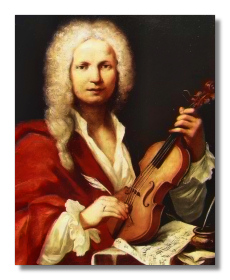
Vivaldi

Composer: Antonio Vivaldi (1678-1741)
Title: "Summer"  Four Seasons
Movements: "Summer" (L'estate)
Date: 1723

 Antonio Vivaldi, known as the "Red Priest", composed this set of violin concertos in 1723. They are one of the earliest examples of program music; that is, instrumental music that evokes or implies a person, place, thing, or story - all without singing or speaking. Inspired by four sonnets, which some believe Vivaldi may have written himself, each of these concertos musically conveys the sounds, sensations and impressions of the four seasons.

For our purposes, we will focus on Concerto No. 2, "Summer", or "L'estate" (click here for pronunciation). It is written in three movements (think of them as sections, but as an inseparable part of a whole, like the chapters of a book). 

While listening to this work, read the sonnet below and try to visualize the scene:
I. Allegro non molto ("Fast, but not too much" - this movement actually starts slowly)
Under a hard Season, fired up by the Sun
Languishes man, languishes the flock and burns the pine
We hear the cuckoo's voice; then sweet songs of the turtledove and finch are heard.
Soft breezes stir the air... but threatening north wind sweeps them suddenly aside.
The shepherd trembles, fearing violent storms and his fate.

II. Adagio e piano - Presto e forte
(Slow and soft - Fast and loud)

The fear of lightning and fierce thunder
Robs his tired limbs of rest
As gnats and flies buzz furiously around.

III. Presto (Fast)
Alas, his fears were justified
The Heavens thunders and roar and with hail
Cuts the head off the wheat and damages the grain.

Thursday, August 23, 2012

Day One

It was nice to meet you all today, I am looking forward to a fun semester!.

As I mentioned at the end of class, please answer these three questions and bring your written/printed answers to class next Thursday. You may also choose to add them as a comment on this blog post.

Don't worry about creating a blog post this week, but feel free if you would like. Please let me know if you have any trouble with blogger or Google documents.

Questions:

1. What would you like to learn during this course?

2. Suggest three guidelines for all classroom discussions.

3. What do you think the biggest challenge in college will be?

To give you a better idea of how to use the class material for your assignments, I have prepared these suggestions:

Blog Comment Ideas:
  • Contribute to and extend the classroom discussion
  • Share a link to a related website, article or blog
  • Offer your insight or opinion on a course topic

Blog Post Ideas:
  • Write an alternate program scenario to the music
  • Present and comment on several ideas about learning and adapting to college.
  • Share a link to a video, slideshow, or recording related to the course

Presentation Ideas:
  • Present an original powerpoint presentation, reading, essay, poem, skit, or composition
  • Present a 5-minute performance (sing, play your instrument, puppet show,)
  • Attend a live concert and give a report or review of the music

Final Project Ideas:
  • Give a research-style poster presentation
  • Create an online project or make a YouTube video
  • Create a work of art (drawing, painting, cartoon, sculpture, mobile, etc.)
  • Write a 10-page paper on a topic related to both your major and the music of this course